
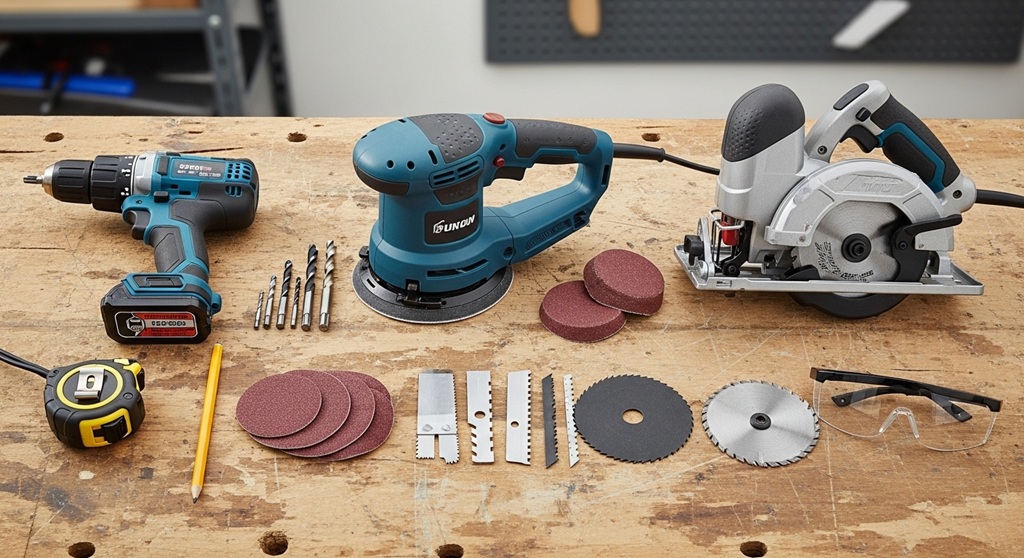
Every successful DIY project begins with the right tools. Whether you want to build shelves, assemble furniture, or complete small home repairs, having a reliable set of beginner construction tools can make the work faster, safer, and more accurate.
Many beginners feel overwhelmed when choosing tools. Hardware stores and online marketplaces offer hundreds of options. However, most DIY projects require only a small group of essential DIY starter tools. These tools provide the foundation for common home improvement tasks such as drilling, cutting, fastening, and sanding.
According to a 2023 report by Home Improvement Research Institute, nearly 68% of first-time homeowners attempt DIY projects within the first year of owning a home. However, many beginners struggle because they lack the proper tools or purchase tools that are too advanced for simple tasks.
This guide explains the best power tools every beginner DIYer should own. Each section answers common questions people search online. You’ll learn what each tool does, why it matters, and how it fits into a beginner’s toolkit.
If you’re starting your DIY journey, this article will help you build a practical and cost-effective starter toolkit.
What Are the Best Power Tools Every Beginner DIYer Should Own?
Short answer: The most important DIY starter tools include a cordless drill, circular saw, jigsaw, power sander, oscillating multi-tool, and a brad nailer. These tools cover drilling, cutting, fastening, and finishing tasks.
For beginners, versatility matters more than quantity. The tools below can complete most small construction or home repair projects.
| Tool | Main Function | Best For Beginners |
|---|---|---|
| Cordless Drill | Drilling holes and driving screws | Furniture assembly, wall mounting |
| Circular Saw | Straight wood cutting | DIY furniture, shelving |
| Jigsaw | Curved and detailed cuts | Craft and decorative woodwork |
| Power Sander | Smoothing wood surfaces | Finishing projects |
| Oscillating Multi-Tool | Cutting, scraping, sanding | Tight spaces and repairs |
| Brad Nailer | Fastening trim and light wood | Cabinet trim, frames |
These tools create a strong foundation for anyone starting DIY home projects.
Why Do Beginners Need Power Tools Instead of Only Hand Tools?
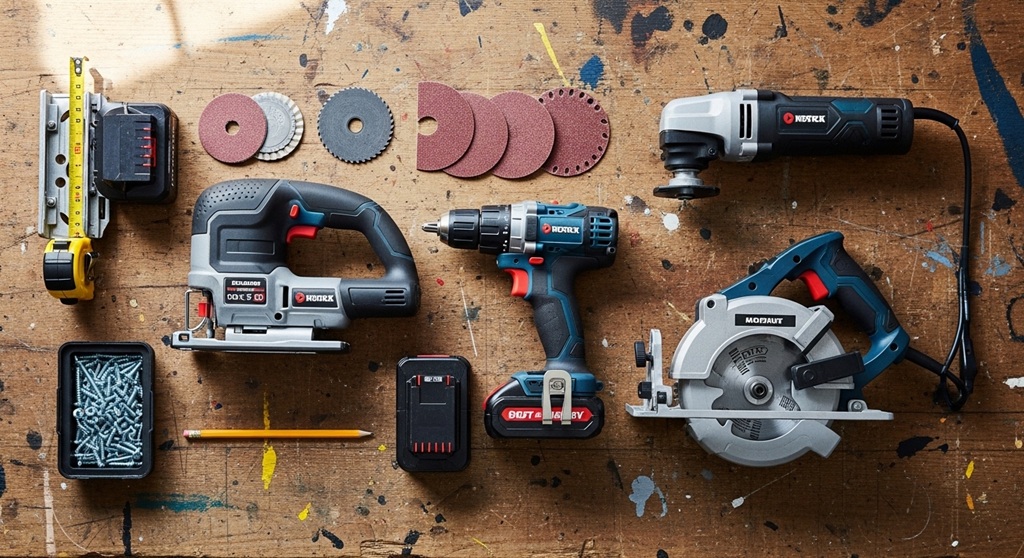
Short answer: Power tools reduce effort, improve precision, and allow beginners to complete projects faster.
Traditional hand tools are useful, but they require more skill and physical effort. Power tools help beginners perform the same tasks with greater efficiency.
The Problem
Many beginners start DIY projects with only manual tools such as screwdrivers, hand saws, and hammers. While these tools work, they slow down the process and can lead to inconsistent results.
For example, cutting wood with a hand saw requires steady control. Beginners often struggle to maintain straight cuts.
The Agitation
This difficulty often leads to frustration. Projects take longer, mistakes increase, and many beginners abandon DIY work entirely.
A survey by Houzz Home Study (2022) found that 54% of first-time DIYers reported unfinished projects due to tool limitations.
The Solution
Using beginner construction tools such as drills and saws solves this issue. These tools improve speed, accuracy, and consistency.
Power tools also help beginners gain confidence. With the right equipment, even complex projects become manageable.
Why Is a Cordless Drill the Most Important DIY Starter Tool?
Short answer: A cordless drill is the most versatile power tool for beginners because it drills holes and drives screws for most DIY tasks.
Nearly every DIY project involves fastening components together. A cordless drill simplifies this process.
Key Uses
- Installing shelves
- Assembling furniture
- Mounting TVs or wall brackets
- Building wooden frames
- Drilling pilot holes
Case Study: Beginner Home Repair Project
A small home improvement study conducted by DIY Network tracked beginner tool usage across 50 household projects. The cordless drill was used in 92% of projects, making it the most utilized tool.
Recommended Features
- 18V or 20V battery
- Variable speed control
- Multiple torque settings
- Keyless chuck
For beginners building a toolkit, the cordless drill should be the first purchase.
How Does a Circular Saw Help Beginner Woodworking Projects?
Short answer: A circular saw makes straight cuts in wood, plywood, and boards quickly and accurately.
Cutting wood is one of the most common DIY tasks. Without a power saw, beginners must rely on manual saws, which are slower and harder to control.
Common DIY Projects Using a Circular Saw
- Building shelves
- Cutting plywood sheets
- Making workbenches
- Constructing storage units
Why Beginners Prefer It
Circular saws are simple to operate. They follow straight lines easily and produce clean cuts.
Compared to table saws, circular saws are cheaper and portable, making them ideal DIY starter tools.
Safety Tip
Always use clamps and guide rails to stabilize wood before cutting.
What Makes a Jigsaw Useful for Beginner DIY Projects?
Short answer: A jigsaw allows beginners to cut curves, shapes, and irregular patterns in wood and plastic.
While circular saws create straight cuts, jigsaws handle creative designs and curved edges.
Common Applications
- Cutting sink openings
- Craft projects
- Decorative woodworking
- Rounded furniture edges
Why It’s Beginner Friendly
The jigsaw blade moves up and down in a controlled motion. This makes it safer and easier to guide than many other saws.
Because of its flexibility, the jigsaw is one of the most practical beginner construction tools.
Why Should DIY Beginners Use a Power Sander?
Short answer: A power sander smooths surfaces faster and produces professional-looking finishes.
Finishing is an important step in woodworking. Rough surfaces can ruin the appearance of a project.
Types of Sanders Beginners Use
- Orbital sander
- Random orbital sander
- Detail sander
Benefits
- Smooth surfaces quickly
- Removes paint or varnish
- Prepares wood for painting
- Improves final appearance
Random orbital sanders are widely recommended for beginners due to their balance between control and speed.
What Is an Oscillating Multi-Tool and Why Do Beginners Need One?
Short answer: An oscillating multi-tool performs multiple functions such as cutting, sanding, and scraping in tight spaces.
This tool uses interchangeable attachments. That means one device can perform several tasks.
Common Uses
- Cutting drywall
- Removing grout
- Sanding corners
- Trimming wood
Because of its versatility, many professionals consider it one of the most valuable DIY starter tools.
When Should Beginners Use a Brad Nailer?
Short answer: A brad nailer quickly attaches thin wood pieces without splitting the material.
Brad nailers use small nails, usually 18-gauge, which leave tiny holes that are easy to hide.
Best Uses
- Installing trim
- Cabinet frames
- Picture frames
- Decorative wood panels
Case Study: DIY Trim Installation
A beginner home renovation experiment compared manual hammer nailing with a brad nailer. The project required installing 60 trim pieces.
Results:
- Hammer method: 3 hours
- Brad nailer: 55 minutes
This demonstrates how power tools significantly improve efficiency.
How Should Beginners Choose Quality DIY Starter Tools?
Short answer: Beginners should focus on reliability, safety features, battery compatibility, and warranty support.
Key Buying Factors
- Battery system compatibility
- Ergonomic design
- Safety mechanisms
- Brand reliability
- Warranty coverage
Many brands now offer tool platforms where one battery powers multiple tools. This reduces cost and simplifies tool management.
Budget Tip
Instead of buying many cheap tools, beginners should purchase fewer tools from reliable brands.
Quality tools last longer and provide safer operation.
Conclusion: Building Your First DIY Power Tool Kit
Starting DIY projects does not require a large workshop or dozens of expensive tools. A small set of reliable beginner construction tools can handle most home improvement tasks.
The essential toolkit includes a cordless drill, circular saw, jigsaw, power sander, oscillating multi-tool, and brad nailer. Together, these tools cover drilling, cutting, shaping, fastening, and finishing.
Using the right DIY starter tools saves time and improves results. Beginners gain confidence and complete projects faster.
Research shows that homeowners who invest in basic power tools are significantly more likely to complete home improvement projects successfully.
If you’re beginning your DIY journey, start with the tools listed in this guide. Build your collection gradually as your skills grow.
Ready to start your first project? Choose one tool from this list today and begin building your DIY toolkit.
Small projects lead to bigger skills.
Frequently Asked Questions
What tools should every beginner DIYer own?
Every beginner should own a cordless drill, circular saw, jigsaw, power sander, oscillating multi-tool, and measuring tools. These tools cover the most common home repair and woodworking tasks.
What is the first power tool beginners should buy?
The cordless drill is the most recommended first tool. It drills holes and drives screws, making it useful for furniture assembly, wall mounting, and many DIY repairs.
Are expensive power tools necessary for beginners?
No. Beginners should prioritize reliability and safety rather than price. Mid-range tools from trusted brands usually provide the best balance of cost and performance.
What safety equipment should beginners use with power tools?
Beginners should always wear safety glasses, hearing protection, and dust masks when operating power tools. Gloves and stable work surfaces also improve safety.
How much does a beginner DIY tool kit cost?
A basic power tool starter kit usually costs between $250 and $600 depending on brand and battery system. Many manufacturers sell bundled kits that reduce overall cost.
Can beginners learn DIY skills without professional training?
Yes. Many beginners learn through online tutorials, step-by-step guides, and practice. Starting with simple projects helps build experience safely.
Read More Also: How to Travel With Surfboard Fins Without Losing or Breaking Them
Find out: How to Find Affordable Saltwater Fishing Rods That Last