
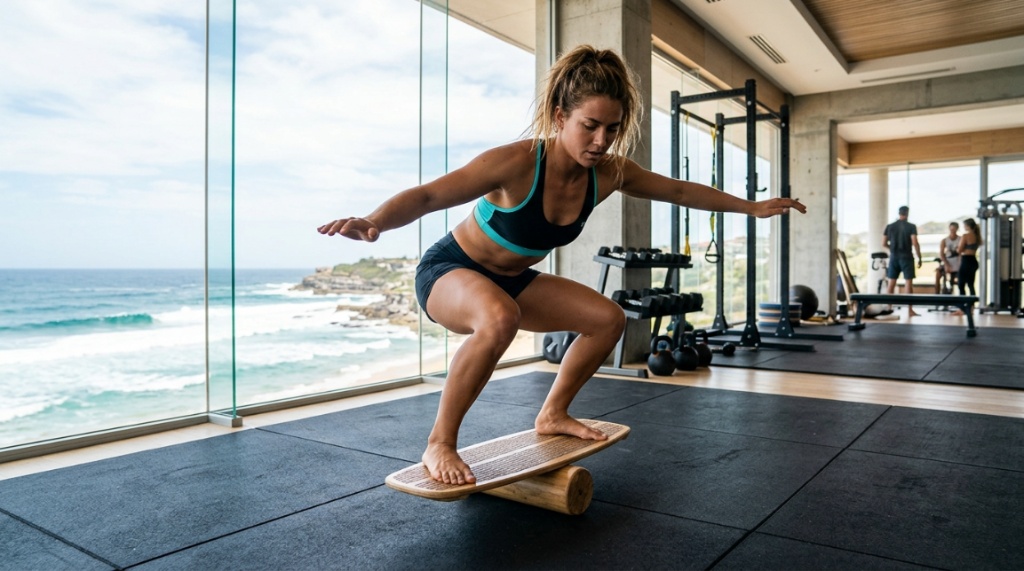
You’ve been watching surf videos, visualizing your turns, and dreaming of carving down the line. But when you finally get in the water, your legs burn after twenty minutes, your balance feels shaky, and your pop-up is slow. The missing link isn’t technique—it’s core strength and stability. That’s why you’re searching for the fastest core strength surf board trainer. You don’t just want any balance board; you want one that delivers results quickly, fits your space, and actually translates to better surfing. This guide breaks down exactly what to look for, which features matter most, and how to avoid wasting money on a board that won’t help you progress.
What Does “Fastest” Really Mean for a Surf Trainer?
When people search for the fastest core strength surf board trainer, they usually mean one of two things: the board that builds strength and balance in the shortest time per session, or the board that creates the most noticeable improvement in surfing ability. Both are valid, but they require different features. A board that’s too unstable might build core strength quickly but teach you bad habits. A board that’s too stable won’t challenge you enough to improve. The sweet spot is a trainer that offers progressive difficulty—something you can adjust as you get better.
The fastest path to improvement isn’t about buying the most expensive or the wobbliest board. It’s about matching the trainer to your current skill level and your specific weakness. If your pop-up is slow, you need a board that lets you practice explosive movements. If you struggle with rail-to-rail transitions, you need a board with a responsive rocker. If you simply want to build a rock-solid core, a simple balance board with a roller might be enough. Understanding your goal first will save you time and money.
Key Factors That Determine Training Speed
- Adjustable difficulty: Boards with multiple rocker settings or interchangeable rollers let you progress without buying a new board.
- Surface area: A wider deck is easier to balance on; a narrower deck forces faster muscle activation.
- Roller type: Cylindrical rollers are best for forward-backward balance; sphere-style rollers (like a Bosu ball on a board) challenge multi-directional stability.
- Non-slip grip: A board that slides under your feet wastes time and creates frustration. Look for a textured deck or traction pad.
- Weight capacity: A board that flexes too much under your weight will feel unstable in the wrong way.
If you want a comprehensive comparison of the best boards available in Florida—including which ones are worth the investment for rapid progress—check out this detailed guide on the fastest core strength surf board trainer. It covers real-world performance and helps you narrow down your options based on your training style.
Why Core Strength Is the Foundation of Surfing Speed
Your legs generate power, but your core transfers that power to your upper body. Without a strong core, every turn feels sluggish, and your balance is easily disrupted by chop or a sudden gust of wind. A surf-specific trainer forces your core to engage constantly, even during small adjustments. This is different from doing crunches or planks on a stable surface. The instability of the board recruits stabilizer muscles that you simply can’t target with traditional ab exercises.
The fastest core strength surf board trainer will mimic the micro-adjustments your body makes while riding a wave. When you stand on a balance board, your ankles, knees, hips, and torso all work together to keep you centered. Over time, this neural adaptation becomes automatic. When you get back in the water, your body already knows how to react to shifting weight and uneven surfaces. That’s why surfers who train on balance boards consistently report faster pop-ups, smoother turns, and less fatigue after a session. To keep your gear organized and your workout space clean, check out our guide on Affordable Surfboard Wall Racks in Florida.
The Difference Between General Balance Training and Surf-Specific Training
A generic balance board (like a wobble board used in physical therapy) will improve your balance, but it won’t necessarily improve your surfing. Surfing requires a specific stance—feet shoulder-width apart, knees bent, weight centered over the board. You also need to practice shifting your weight forward and backward to simulate trimming and turning. A surf-specific trainer has a shape and rocker that mimics a surfboard, so your muscle memory transfers directly to the water.
Look for a board with a slight curve (rocker) from nose to tail. This allows you to practice the same weight shifts you use when you’re riding a wave. Some trainers even come with a “surf stance” marker or a raised tail to help you position your feet correctly. These small design details make a big difference in how quickly you see results.
How to Choose the Right Trainer for Your Skill Level
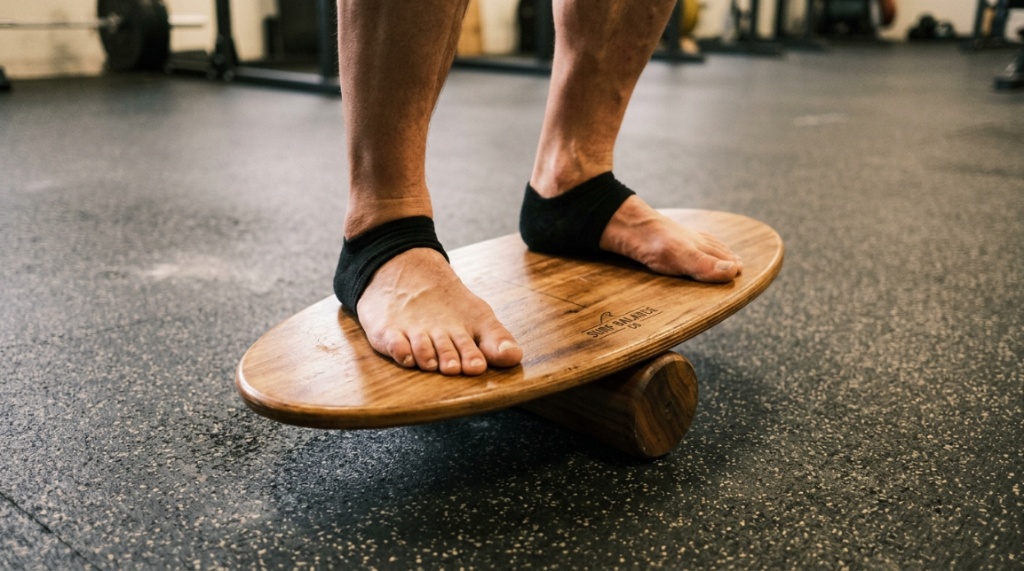
Beginners often make the mistake of buying the most unstable board they can find, thinking it will speed up their progress. In reality, this leads to frustration, poor form, and potential injury. Start with a board that offers a moderate level of instability—enough to challenge you but not so much that you can’t hold a position for at least 30 seconds. As you improve, you can increase the difficulty by using a smaller roller or a board with a more pronounced rocker.
Intermediate surfers should look for a trainer that allows for dynamic movements, not just static balancing. Can you do squats on it? Can you shift your weight quickly from toe to heel? Can you practice your pop-up on it? These functional movements are what build the strength and coordination you need for faster surfing. A board that only allows for slow, controlled balancing will plateau after a few weeks.
Advanced surfers might benefit from a trainer that simulates the feeling of a turning board. Some high-end trainers have a swivel mechanism that mimics the pivot of a surfboard during a cutback. This is the closest you can get to surfing on land, and it’s excellent for refining your technique and building the specific muscles used in turning.
Common Mistakes When Buying a Surf Balance Board
- Ignoring the roller: The roller is just as important as the board. A hard plastic roller on a smooth floor can be slippery and dangerous. Look for a roller with a grippy surface or use it on a carpet.
- Not checking the weight limit: Most boards support up to 300 pounds, but some cheaper models have lower limits. Check the specs before you buy.
- Buying a board that’s too small: Your feet should fit comfortably on the deck with a little room to spare. A board that’s too small will make it hard to find your stance.
- Skipping the safety equipment: A helmet and wrist guards are a good idea, especially when you’re first starting out. Falls happen faster than you think.
Training Routines That Maximize Your Time on the Board
Having the fastest core strength surf board trainer won’t help if you don’t use it correctly. A 10-minute focused session is more effective than a 30-minute session where you’re just standing there. Here’s a simple routine to get you started:
- Warm-up (2 minutes): Stand on the board with both feet, holding onto a wall or chair. Shift your weight gently from side to side and front to back to get a feel for the movement.
- Static balance (3 minutes): Let go of the support and try to hold your balance for as long as you can. Keep your knees soft and your eyes focused on a fixed point. Do this for 3 sets of 30 seconds, resting in between.
- Dynamic movements (3 minutes): Once you’re comfortable, start doing slow squats on the board. Then, practice shifting your weight to the front of the board (like you’re trimming) and the back (like you’re stalling).
- Pop-up practice (2 minutes): Place your hands on the board in a push-up position. Jump your feet up into your surf stance, just like you would when popping up on a wave. This builds explosive power and coordination.
Do this routine 4-5 times a week. You’ll notice a difference in your balance and core strength within two weeks. The key is consistency, not intensity.
Comparing Popular Types of Surf Trainers
| Type | Best For | Pros | Cons |
|---|---|---|---|
| Balance Board with Roller | Beginners, general balance | Simple, affordable, good for forward-backward balance | Limited multi-directional movement |
| Sphere-Based Board | Intermediate, multi-directional stability | Challenges all planes of movement, mimics chop | Can be very difficult for beginners |
| Surf-Specific Rocker Board | Advanced surfers, technique refinement | Mimics surfboard shape, allows for turning practice | More expensive, may require more skill |
| Inflatable Balance Pad | Travel, low-impact training | Portable, easy to store, good for ankle stability | Less challenging, doesn’t mimic surfboard feel |
Your choice should depend on your current ability and what you want to improve. If you’re just starting out, a simple roller board is a great first step. If you’ve been surfing for a while and want to work on your turns, a surf-specific rocker board is worth the investment.
Frequently Asked Questions
How often should I use a surf balance board to see results?
For noticeable improvement in core strength and balance, aim for 10-15 minutes per day, 4-5 days a week. Consistency matters more than long sessions. You should feel more stable on the board within two weeks.
Can a balance board really improve my surfing?
Yes, but it’s not a substitute for time in the water. A balance board trains your core, ankles, and proprioception (your body’s awareness of its position). These are essential for surfing, but you still need to practice wave reading, paddling, and timing in the ocean.
What’s the difference between a wobble board and a surf trainer?
A wobble board typically has a hemisphere underneath and tilts in all directions. A surf trainer usually has a cylindrical roller and mimics the forward-backward motion of a surfboard. Surf trainers are better for practicing weight shifts and turns.
Is it safe to use a surf balance board indoors?
Yes, but you should use it on a non-slip surface like a yoga mat or carpet. Clear the area around you of furniture and sharp objects. Start by holding onto a wall or chair until you feel confident.
Do I need to be fit to start using a balance board?
No, you can start at any fitness level. Begin with short sessions and hold onto a support if needed. As your core strength improves, you’ll be able to balance without assistance.
Conclusion
Finding the fastest core strength surf board trainer isn’t about chasing a magic product—it’s about understanding your own weaknesses and choosing a tool that targets them directly. Focus on adjustability, surf-specific design, and a roller that matches your skill level. Start with a simple routine, stay consistent, and you’ll build the core strength and balance that translates to faster, more confident surfing. Remember that the best trainer is the one you actually use, so pick something that fits your space and your goals. Get on the board, put in the work, and the results will follow.