
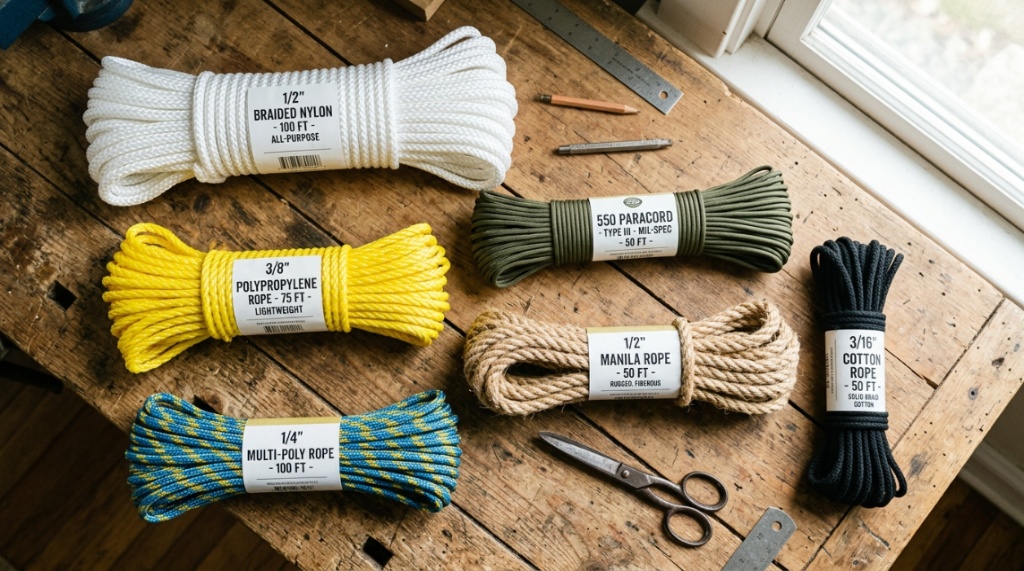
You need a rope that can handle camping, towing, and securing a load, but the hardware store offers dozens of options that range from cheap nylon to expensive specialty cords. What is the real difference, and how do you find a rope that works for multiple jobs without breaking your budget? Most shoppers either overspend on technical ropes they do not need or buy the cheapest option that snaps under pressure. The key lies in understanding material properties, construction, and diameter so you can pick affordable multi-purpose ropes that deliver real value for everyday tasks like tying down gear, setting up a tarp, or creating a clothesline in a pinch.
What Makes a Rope Truly Multi-Purpose?
A true multi-purpose rope balances strength, flexibility, UV resistance, and knot-holding ability across different applications. It is not a specialist tool for climbing or marine docking but a generalist that performs well for camping, household tasks, light utility work, and auto tie-downs.
Key Characteristics of a Versatile Rope
- Material blend: Polypropylene and polyester blends offer a good compromise between cost and durability.
- Construction type: Three-strand twisted ropes are easier to knot and inspect than braided ropes.
- Diameter range: a 3/8-inch (9.5 mm) diameter is the sweet spot for general use.
Why Specialized Ropes Are Overkill for Most People
If you are not climbing El Capitan or mooring a yacht in a hurricane, you do not need a dynamic climbing line or a high-modulus polyethylene rope. Specialized ropes cost three to five times more and offer marginal benefits for tasks like tying down a kayak or hanging a hammock. Affordable general-purpose ropes cover 90 percent of everyday needs.
Which Materials Offer the Best Balance of Price and Performance?
Nylon, polyester, polypropylene, and natural fibers each have distinct trade-offs. For the average user who needs an affordable multi-purpose rope, polyester and polypropylene blends deliver the best mix of UV resistance, strength, and low water absorption.
Polypropylene: Lightweight and Budget-Friendly
- Pros: Floats on water, is UV resistant, is low cost, and is lightweight.
- Cons: Slippery knots, lower breaking strength than nylon, degrades under prolonged sun exposure.
Polyester: The Durable Workhorse
- Pros: Excellent UV resistance, minimal stretch, strong wet or dry, holds knots well.
- Cons: Heavier than polypropylene, slightly more expensive.
Nylon: High Strength but High Maintenance
- Pros: Highest shock absorption, very strong, stretches without breaking.
- Cons: Degrades in sunlight, absorbs water and freezes, more expensive.
Natural Fibers (Sisal, Manila, Cotton)
- Pros: Biodegradable, good grip when dry, traditional look.
- Cons: Rots with moisture, low UV resistance, sheds fibers, and is not suitable for loads.
How Does Rope Construction Affect Durability and Usability?
Three-strand twisted construction offers the most practical combination of knot-holding ability, flexibility, and inspectability for general-purpose use. Braided ropes are stronger but harder to untie and more expensive.
Three-Strand Twisted Rope
- Easy to splice and tie knots that stay put.
- Simple to inspect for internal wear or damage.
- More affordable than braided alternatives.
- Ideal for tie-downs, camping, and around-the-house tasks.
Double-Braid Rope
- Higher strength-to-weight ratio.
- Less prone to kinking.
- More expensive and harder to knot securely.
- Better for winching and high-load applications.
Solid Braid Rope
- Smooth outer surface resists abrasion.
- Poor knot-holding performance.
- Often used for decorative or light utility work.
What Diameter Should You Choose for Everyday Tasks?
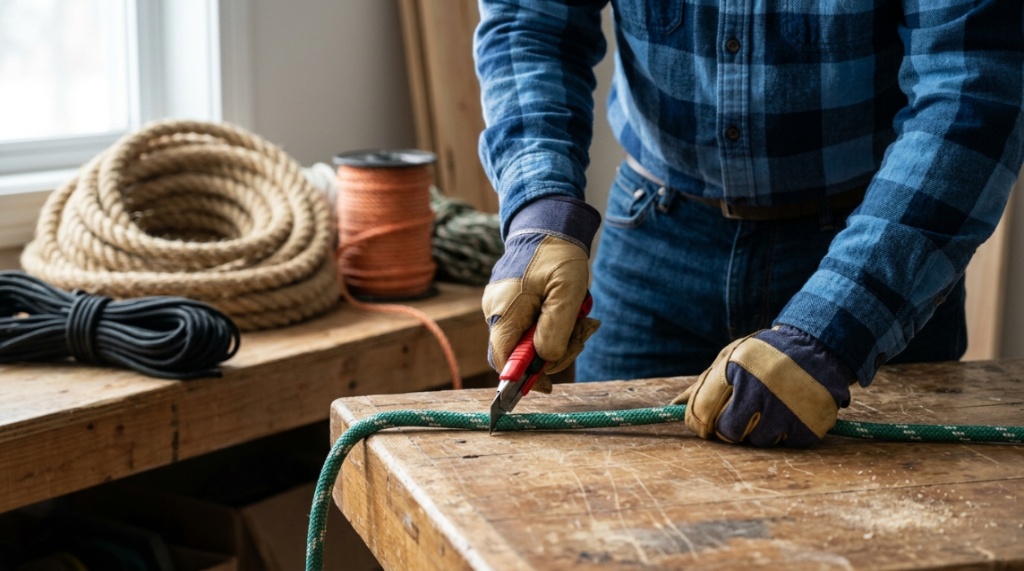
A 3/8-inch (9.5 mm) diameter rope handles most general tasks, from securing loads on a roof rack to rigging a clothesline. Thinner ropes lack sufficient breaking strength for tie-downs, while thicker ropes become stiff and difficult to work with.
Recommended Diameters by Use Case
| Task | Recommended Diameter | Typical Breaking Strength |
|---|---|---|
| Camping clothesline | 1/4 inch (6 mm) | 200-400 lbs |
| Tying down gear | 3/8 inch (9.5 mm) | 600-1,200 lbs |
| Auto tie-downs | 1/2 inch (12.7 mm) | 1,500-2,500 lbs |
| Towing light trailers | 5/8 inch (16 mm) | 3,000-5,000 lbs |
Why Thinner Ropes Often Fail
Many budget ropes marketed as “multi-purpose” come in 1/4-inch diameters that look adequate but snap under moderate loads. Always check the breaking strength rating, not just the diameter. A 3/8-inch polyester rope from a reputable brand will outlast a thinner, cheaper alternative every time.
Before you start cutting and securing materials with your new ropes, you’ll want to ensure you have the right gear on hand. Check out our guide on the Practical Home Repair Tools List for Beginners to round out your DIY toolkit.
How Can You Test Rope Quality Without Expensive Equipment?
You can assess a rope’s quality in under two minutes using simple visual and tactile checks. This saves you from buying a rope that looks good on the shelf but fails after a few uses.
The Bend Test
Fold the rope into a tight U-shape. If the outer fibers crack or separate visibly, the rope has poor construction or low-quality materials. Good ropes bend smoothly without fiber breakage.
The Knot Hold Test
Tie an overhand knot and pull it tight. If the knot slips loose with moderate force, the rope has a slick finish that will not hold knots reliably. A quality multi-purpose rope should keep the knot intact until you untie it.
The UV Check
Look at the rope label for UV resistance ratings. Ropes marketed as “all-purpose” often skip this detail. A rope without UV stabilizers will turn brittle and fade after three months of outdoor use.
Where Should You Buy Affordable Multi-Purpose Ropes That Last?
Specialty outdoor and hardware stores offer better quality than big-box discount chains because they source ropes designed for actual use rather than extreme cost reduction. Online retailers with detailed specifications also provide good options, but you must check the material and breaking strength before purchasing.
Hardware Stores vs. Outdoor Retailers
- Hardware stores: Good for immediate needs, but often stock low-grade polypropylene that degrades quickly.
- Outdoor retailers: Higher quality polyester and nylon blends and better UV resistance, but sometimes premium pricing.
- Online specialty shops: Offer the best selection and competitive prices, but you must verify return policies.
How to Read Product Labels Correctly
Many budget ropes list breaking strength in pounds without specifying whether the measurement is dry or wet. Always look for minimum breaking strength (MBS) and confirm the material. A rope labeled “utility rope” with no material specification is almost always low-grade polypropylene. For a reliable option, check out these affordable multi-purpose ropes that provide verified specifications and real-world durability.
What Common Mistakes Should You Avoid When Choosing a Multi-Purpose Rope?
Buying by price alone, ignoring UV resistance, and choosing the wrong diameter are the three most common errors. These mistakes cost you money and create safety hazards.
Mistake #1: Buying the Cheapest Rope on the Shelf
Low-cost ropes often use recycled polypropylene with reduced breaking strength and no UV stabilizers. A $5 rope that snaps after three uses costs more per use than a $15 rope that lasts three years.
Mistake #2: Choosing the Wrong Material for Your Climate
If you live in a sunny region, avoid nylon. If you need a rope that floats, avoid polyester. If you store ropes in a damp shed, avoid natural fibers. Material choice directly affects longevity.
Mistake #3: Ignoring the Breaking Strength Safety Margin
Never use a rope at its maximum breaking strength. A safety margin of at least 5:1 is standard for tie-downs and 10:1 for lifting or towing. A 1,000-pound breaking strength rope should not handle loads above 200 pounds for towing.
How Do You Properly Store a Multi-Purpose Rope to Extend Its Life?
Proper storage quadruples the usable life of an affordable multi-purpose rope. Sunlight, moisture, and dirt cause more damage than regular use.
Storage Do’s
- Coil the rope loosely to prevent kinks and permanent bends.
- Store in a cool, dry place away from direct sunlight.
- Keep ropes off concrete floors to avoid moisture absorption.
Storage Don’ts
- Do not store ropes in sealed plastic bags, which trap moisture.
- Do not hang ropes on sharp hooks, which cut outer fibers.
- Do not expose ropes to gasoline, oil, or chemical solvents.
Inspection Routine Before Each Use
Run the rope through your hands slowly, feeling for soft spots, flat sections, or protruding fibers. Any of these indicate internal damage. Replace the rope immediately if you find signs of wear.
Can One Rope Handle Camping, Towing, and Household Tasks?
Yes, a single 3/8-inch polyester three-strand rope can handle all three, provided you respect its load limits. The key is understanding when to use alternative ropes for extreme conditions like towing heavy vehicles or climbing.
Camping and Outdoor Tasks
- Clothesline for drying wet gear.
- Bear bag line when hanging food away from camp.
- Tarp ridgeline for shelter construction.
- Tying gear to a backpack.
Household and Utility Tasks
- Securing items on a roof rack or truck bed.
- Creating a temporary fence or garden trellis.
- Binding firewood or recycling bundles.
- Pulling light objects through tight spaces.
Limitations of a Single Rope
One rope cannot do everything. If you frequently tow vehicles weighing over 3,000 pounds, buy a dedicated tow rope with 10,000-pound breaking strength. If you climb trees or rock faces, use certified dynamic climbing ropes. For everything else, a quality multi-purpose rope suffices.
When Should You Replace an Affordable Multi-Purpose Rope?
Replace your rope immediately if you see fraying, discoloration from UV damage, soft spots, or stiffness that does not work out. Do not wait until the rope breaks during use.
Visible Signs of Wear
- Frayed or broken outer fibers that expose the core.
- Faded color with a powdery surface texture (UV degradation).
- Flat spots that indicate crushing or internal damage.
- Knots that have become permanently deformed.
Performance-Based Signs
- The rope feels stiffer than when new.
- Knots that used to hold now slip easily.
- The rope no longer coils smoothly and has memory kinks.
How Often to Replace With Regular Use
For weekly outdoor use, replace every two to three years. For occasional indoor use, five to seven years is reasonable. Inspect before every major use event, such as a camping trip or a heavy towing task.
Frequently Asked Questions
What is the strongest type of affordable multi-purpose rope?
Polyester three-strand twisted rope offers the best strength-to-cost ratio for general use. It holds knots well, resists UV damage, and maintains strength when wet, unlike nylon or polypropylene.
Can I use a multi-purpose rope for towing a car?
Only if the rope has a breaking strength at least five times the weight of the towed vehicle. For most cars, you need a 3/4-inch polyester rope with at least 5,000 pounds breaking strength. Standard 3/8-inch ropes are not sufficient.
How do I remove mildew from an outdoor rope?
Wash the rope with mild soap and water, then rinse thoroughly. Soak in a solution of one part white vinegar to three parts water for 30 minutes. Dry completely in the shade before storing.
What is the best knot for securing a multi-purpose rope?
The bowline knot is safest for load-bearing tasks because it does not slip and is easy to untie. For quick tie-downs, a trucker’s hitch provides mechanical advantage and secure tension.
Are colored ropes less durable than natural-colored ropes?
Colored ropes can be just as durable if the dye is integrated during manufacturing. Avoid painted ropes where the color sits only on the surface, as this indicates low quality.
Can I leave a multi-purpose rope outside year-round?
No. Even UV-stabilized polyester ropes degrade after six months of continuous sun exposure. Store ropes indoors or in a UV-protected container when not in use.
How do I cut a multi-purpose rope without it fraying?
Use a hot knife or a soldering iron to melt the ends as you cut. For synthetic ropes, this fuses the fibers and prevents unraveling. For natural fiber ropes, dip the ends in liquid fray-check glue.
Conclusion
Choosing affordable multi-purpose ropes comes down to understanding material, construction, and diameter rather than guessing or buying the cheapest option. Polyester three-strand ropes in a 3/8-inch diameter provide the best balance of strength, UV resistance, knot-holding ability, and cost for everyday tasks like camping, tie-downs, and household projects. Avoid the common mistakes of ignoring UV ratings, picking the wrong diameter, and skimping on safety margins. Inspect your rope before each use and store it properly to maximize its lifespan. Now that you know exactly what to look for, you can confidently pick a rope that performs well without overspending.