You watch your child roll down the sidewalk on their skateboard, and your stomach drops. You want them to have fun, but you also want them safe. You bought a set of knee pads, elbow pads, and wrist guards, but the pads slide down the moment they fall. The problem isn’t the equipment—it’s the fit. Ill-fitting pads create a false sense of security and can actually cause more harm than wearing no pads at all. Fitting kids skateboard pads correctly is the only way to guarantee that the gear stays in place during a crash. This guide will walk you through exactly how to measure, adjust, and test each piece of protective gear so your child can skate with confidence.
What Does a Proper Fit for Kids Skate Pads Look Like?
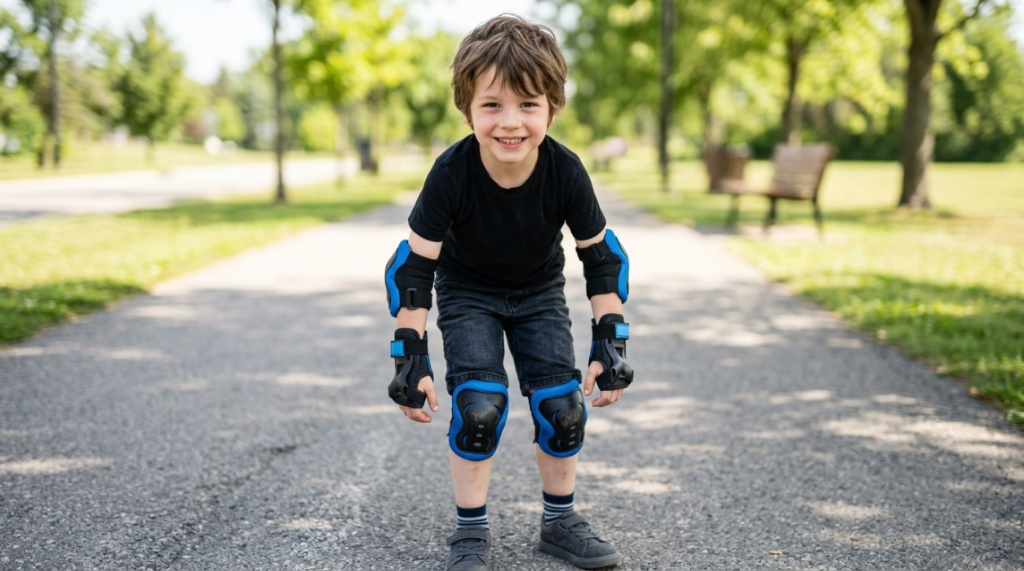
A properly fitted skate pad should feel snug without cutting off circulation. It should cover the entire impact zone—like the kneecap or elbow tip—and stay firmly in place when your child bends, jumps, or falls. If you can slide a finger easily under the pad, it is too loose. If the pad leaves deep red marks after five minutes, it is too tight.
The Snug-But-Not-Tight Rule
The ideal fit sits somewhere between a firm handshake and a hug. The pad should not shift during active movement. To test this, have your child do five deep squats and five arm circles. If the knee pad slides down below the kneecap or the elbow pad twists toward the forearm, you need to tighten the straps or try a smaller size.
How to Check for Pressure Points
Pay attention to the back of the knee and the crook of the elbow. These areas are sensitive and prone to chafing. If the straps dig in or the pad creates a bulge behind the joint, the pad is either the wrong size or positioned incorrectly. Adjust the pad so that the hard cap sits directly over the bony part of the knee or elbow, not above or below it.
How Do I Measure My Child for Skate Pads?
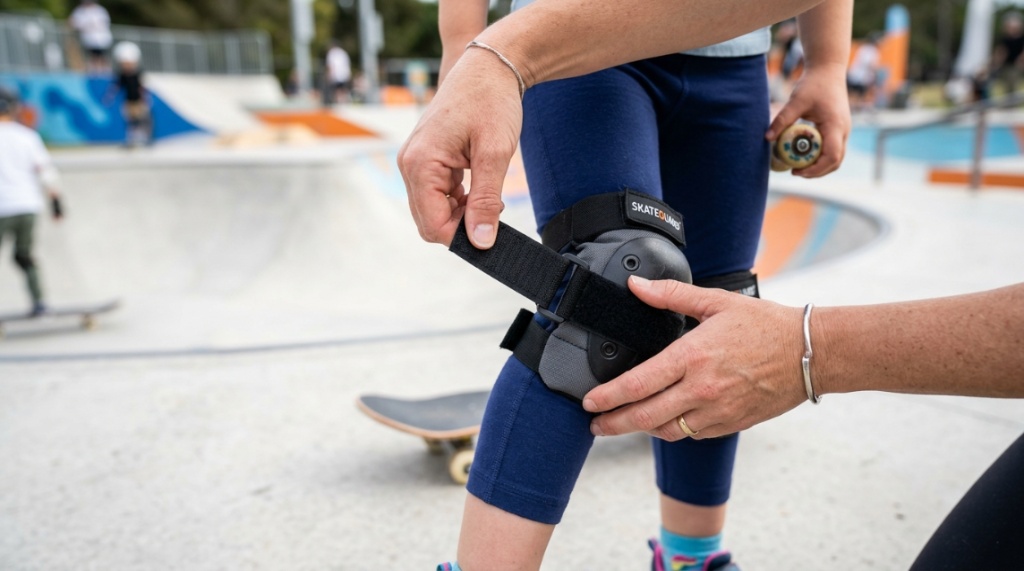
Measuring for skate pads is different from measuring for clothing. You need a flexible tape measure and your child standing in a natural, relaxed position. Measure the circumference of the knee cap, the widest part of the calf just below the knee, and the thigh just above the knee. Repeat the process for the elbow and wrist.
Measuring for Knee Pads
Have your child stand with their legs straight but not locked. Wrap the tape measure around the center of the kneecap. Write down that number. Then measure 2 inches above the kneecap and 2 inches below the kneecap. The pad you choose should match the largest of these three measurements. Most kids’ sizes correspond to a range of 10 to 14 inches for the knee circumference.
Measuring for Elbow Pads
Ask your child to bend their arm at a 90-degree angle. Measure around the elbow point. Then measure 2 inches above and below the elbow. Elbow pads tend to run smaller than knee pads. A typical kids’ elbow pad fits a circumference of 8 to 11 inches. If your child falls between sizes, always size up and tighten the straps rather than sizing down.
Measuring for Wrist Guards
Wrist guards are unique because they combine a brace with a pad. Measure the circumference of the wrist at the smallest point, just below the hand. Then measure the palm width. The wrist guard should extend from the middle of the palm to about 2 inches up the forearm. If the plastic splint pokes into the palm or presses against the wrist bone, the guard is too small.
Which Type of Straps and Closures Offer the Best Fit?
Not all straps are created equal. The closure system determines whether the pad stays put during a fall. Velcro straps with elastic webbing provide the best combination of adjustability and hold. Buckle systems are durable but harder to adjust on a wiggly child. Avoid pads with only a single elastic band—they offer no adjustability and fail quickly.
Why Velcro Straps Are the Gold Standard
Velcro straps allow for micro-adjustments. You can tighten the top strap slightly more than the bottom strap if your child has thicker thighs and slimmer calves. Look for straps that are at least 1 inch wide. Narrow straps dig into the skin. Wide straps distribute pressure evenly and keep the pad from rolling.
The Danger of Over-Tightening
Parents often crank the straps as tight as possible, thinking tighter equals safer. The opposite is true. Over-tightened straps cut off blood flow and cause numbness. They also create a tourniquet effect that can cause bruising. Tighten the straps until the pad is secure but you can still slide one finger between the strap and the skin. That is the sweet spot.
How Do I Know If the Knee Pads Are Positioned Correctly?
Correct positioning is just as important as fit. The hard plastic cap must sit directly over the kneecap, not above it and not below it. When your child bends their knee, the pad should flex with the joint and stay centered. If the pad migrates to the side during movement, the fit is off.
The Kneeling Test
Have your child kneel on a soft mat or carpet. The knee pad should make full contact with the ground. If the pad hits the floor before the knee does, it is too low. If the knee hits the floor before the pad, it is too high. Adjust the pad until the cap and the kneecap align perfectly. Then have your child stand up and check the alignment again.
Common Positioning Mistakes
Many parents position knee pads too low because they think it looks more comfortable. This leaves the upper shin exposed and the kneecap unprotected. Other parents pull the pad too high, which restricts knee flexion and makes skating feel awkward. The center of the cap should always align with the center of the kneecap, no exceptions.
Can Elbow Pads Fit Securely Without Restricting Movement?
Yes, but only if you choose the right style. Scab-style elbow pads are long and wrap around the forearm. Cap-style pads are shorter and focus only on the elbow tip. For kids, scab-style pads offer better protection because they cover more surface area. The key is finding a pad that stays put without limiting the arm’s range of motion.
The Arm Extension Test
Have your child fully extend their arm and then fully bend it. The pad should not bunch up in the crook of the elbow. If it does, the pad is too long or the straps are too tight. Look for pads with a pre-curved shape that matches the natural bend of the arm. Flat pads that do not curve will always bind when the arm bends.
Double-Strap Security for Elbow Pads
Elbow pads endure a lot of twisting motion. A single strap is usually not enough to keep them in place. Always choose elbow pads with at least two straps. The top strap goes above the bicep, and the bottom strap goes below the forearm. Both straps should be equally tight. An uneven strap distribution causes the pad to rotate.
What Is the Right Way to Fit Wrist Guards?
Wrist guards are the most commonly misfitted piece of skate gear. The plastic splint must sit flat against the palm, not pressed into the wrist crease. The strap should go over the top of the hand, not the palm. Most kids try to put wrist guards on like gloves. They are actually braces that should be snug but not restrictive.
Splint Alignment Is Critical
The plastic splint on the underside of the wrist guard prevents the wrist from bending backward during a fall. If the splint is too long, it jabs into the palm. If it is too short, it does not offer any protection. The splint should end right at the base of the fingers. You should feel it when you make a fist, but it should not hurt. Once you have learned how to choose skate shoes that provide proper grip and board feel, your next priority is ensuring your child has correctly fitted protective pads.
How Tight Should Wrist Guards Be?
Tighten the wrist strap first, then the hand strap. The wrist strap should be firm enough that the guard does not slide up and down. The hand strap should be just snug enough to keep the plastic splint in contact with the palm. If your child complains about numbness or tingling in their fingers, the straps are too tight. Loosen them immediately.
How Often Should I Adjust or Replace Kids Skate Pads?
Kids grow fast, and skate pads wear out even faster. You should check the fit of your child’s pads every month during the skating season. A pad that fit perfectly in June may be dangerously loose by August. Replace pads as soon as you notice cracks in the plastic, frayed straps, or compressed foam that no longer springs back.
Signs of Wear to Watch For
Inspect the hard plastic caps for hairline cracks after every major fall. Cracks mean the cap has already absorbed an impact and will not protect again. Check the Velcro straps for lint buildup or worn hooks. If the straps no longer stick firmly, the pad will slip mid-fall. Replace the entire pad set, not just the straps.
Growth Spurts and Pad Fit
If your child outgrows their pads, do not try to make them work by over-tightening the straps. This compromises protection and comfort. Most kids need a new size every 12 to 18 months. If you are unsure about sizing, look for adjustable pads that expand slightly. Just remember that adjustable pads have a limit. Once they are maxed out, buy the next size up.
Which Materials Provide the Best Protection and Comfort?
The best kids skate pads use a hard outer plastic shell over a thick inner foam layer. The foam should be high-density EVA or polyurethane. These materials absorb impact energy without being too heavy. The outer shell should be smooth and impact-resistant. Avoid pads with fabric covers over soft foam—they offer almost no protection in a hard fall.
Foam Density vs. Thickness
Thicker foam is not always better. If the foam is too thick, it restricts movement and makes the pad bulky. Look for foam that is at least 10 millimeters thick but not more than 15 millimeters for kids. The density should be high enough that you cannot easily compress the foam with your thumb. Soft foam compresses completely on impact, transferring all the force to the bone.
Breathability and Sweat Management
Kids sweat. Look for pads with mesh panels or moisture-wicking fabric on the inside. Neoprene sleeves are comfortable but trap heat. If your child complains about sweaty knees or itchy elbows, look for pads with a breathable knit backing. Some brands also offer antimicrobial liners to reduce odor. A comfortable pad is a pad your child will actually wear.
What Should Kids Avoid When Wearing Skate Pads?
Kids often make mistakes that reduce the effectiveness of their pads. Wearing pads over baggy clothing is the most common error. Loose fabric bunches up under the straps and causes the pad to shift. Skin-tight base layers or thin leggings work best. Also, avoid putting pads on over wet or sweaty skin—they slide even with tight straps.
The Danger of Hand-Me-Down Pads
Hand-me-down pads might save money, but they carry hidden risks. Previous impacts may have damaged the foam or shell in ways you cannot see. The pads were also molded to someone else’s body shape. A pad that conformed to an older sibling’s knee will not fit a younger sibling correctly. Buy new pads for optimal fit and protection.
Why You Should Never Wear Pads Over Bare Skin
Some kids try to wear pads directly against bare skin to stay cool. This is a bad idea. The plastic and foam can cause friction burns during a slide. The straps also irritate the skin and cause rashes. Always wear a thin layer of clothing under pads. A pair of leggings or a long-sleeve shirt under the pads prevents chafing and helps the pads stay in place.
Getting the fit right means your child can focus on learning to skate instead of constantly adjusting slipping gear. Take the time to measure, test, and adjust each pad. When your child puts on their gear and it feels like a second skin, you both win. For more detailed recommendations on complete safety sets designed for young skaters, check out our guide on fitting kids skateboard pads in different weather conditions and urban environments.
Frequently Asked Questions
Can my child wear knee pads over jeans?
It is not recommended. Thick denim bunches under the straps, causing the pad to shift during a fall. Thin leggings or athletic pants are much better for keeping pads secure.
How do I clean kids skate pads without ruining them?
Hand wash the foam and fabric with mild soap and cold water. Never put them in the washing machine or dryer. Air dry them away from direct heat to prevent the foam from degrading.
Are cheap skate pads safe for beginners?
Some budget pads meet basic safety standards, but many use low-density foam that compresses easily. For beginners who fall often, invest in mid-range pads with hard plastic shells and thick EVA foam.
Should my child wear all three pad types at once?
Yes. Knee pads, elbow pads, and wrist guards all protect different body parts. A fall on the hand can break a wrist even if the knees are protected. Always wear the full set.
How tight should the straps be for a five-year-old?
Snug enough that you can slide one finger under the strap. If the strap leaves deep red marks after five minutes, it is too tight. Check for signs of discomfort every few minutes during the first session.
Can I use rollerblade pads for skateboarding?
Rollerblade pads are designed for forward falls and may not offer enough coverage for skateboarding falls, which often happen sideways. Skateboard-specific pads have wider caps and stronger straps. Use pads designed for skateboarding.
Do pads expire even if they look fine?
Yes. Foam degrades over time, even without visible damage. If the pads are more than two years old or have been stored in a hot garage, replace them. Old foam does not absorb impact effectively.