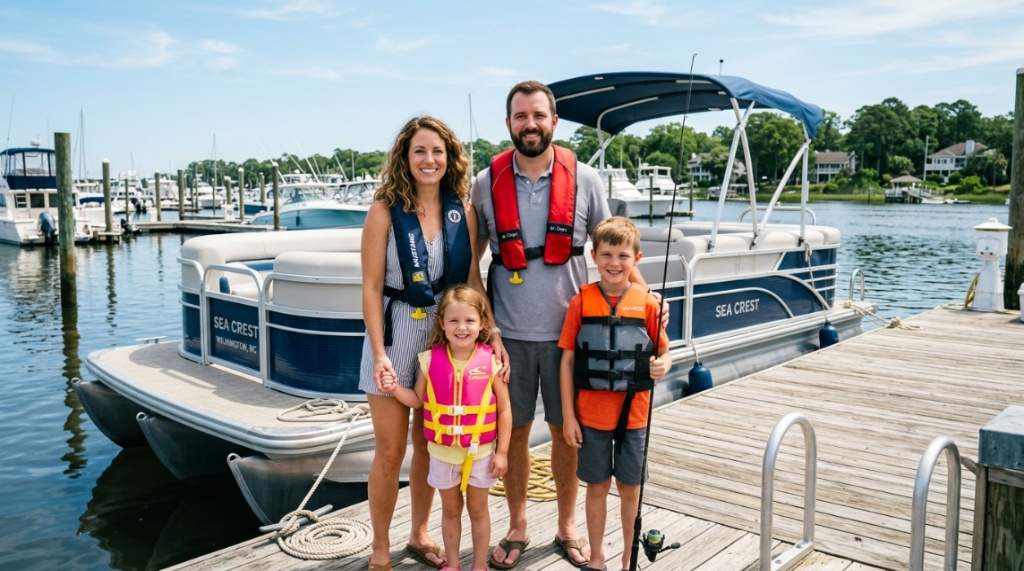
You’re standing on a dock in Morehead City, the summer sun beating down, ready to launch your boat. But a nagging thought creeps in: “Is my life jacket actually legal here?” You’re not alone. Every year, North Carolina anglers and boaters face the confusion of selecting a life jacket that meets both federal standards and state-specific regulations. The problem isn’t finding a life jacket—it’s finding one that is a USCG-approved PFD NC law enforcement will accept. Without the right type, you risk a hefty fine and, worse, your safety. The solution is understanding exactly what the U.S. Coast Guard approves, how North Carolina enforces those standards, and which specific features matter for your local waters. This guide walks you through every requirement so you can buy with confidence.
What Exactly Does “USCG-Approved PFD” Mean in North Carolina?
A USCG-approved PFD (Personal Flotation Device) is a life jacket that has passed rigorous testing by the U.S. Coast Guard and is stamped with an approval number. In North Carolina, this approval is non-negotiable. Any life jacket worn or carried on a vessel must display that official label. If it lacks the approval stamp, it is not legal, regardless of how well it floats.
The Official Approval Label and What It Looks Like
Every approved PFD has a permanent label sewn inside. This label includes the Coast Guard approval number (e.g., 160.064), the Type classification (I, II, III, IV, or V), the weight range, and the manufacturer details. Never remove this label—doing so voids the approval and makes the PFD illegal in NC waters.
Why NC Law Specifically Requires USCG Approval
North Carolina General Statute § 75A-13 mandates that all vessels must carry one wearable PFD per person, plus one throwable device for boats 16 feet or longer. State law enforcement, including the Wildlife Resources Commission, checks for the USCG stamp. A jacket marked “Not approved for use” or “Not a PFD” will result in a citation.
Common Misconception: “USCG-Approved” vs. “Coast Guard Recommended”
Some products use phrasing like “Coast Guard recommended” or “meets USCG standards.” These are marketing terms. Only a jacket with an actual USCG approval number stamped on the label counts. If you see vague language, move on. Always verify the label before purchase.
Which Types of USCG-Approved PFDs Are Best for NC Waters?
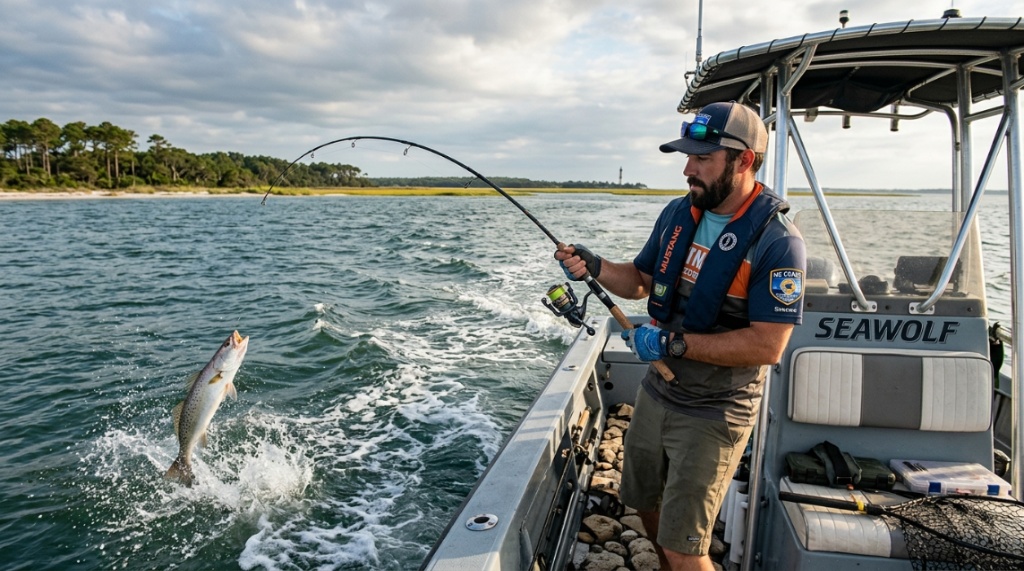
The Coast Guard classifies PFDs into five types, but only Types I, II, III, and V are suitable for North Carolina boating and fishing. Your choice depends on your specific activity—offshore fishing, inland lake kayaking, or inshore wading.
Type I: Offshore Life Jackets for Open Ocean and Coastal NC
Type I jackets are designed to turn an unconscious person face-up. They are the most buoyant and are ideal for offshore fishing trips from Wilmington to the Outer Banks. They are bulky but offer the highest level of safety in rough seas. While legal everywhere, they are uncomfortable for active use in warmer months.
Type III: The Preferred Choice for Most NC Anglers
Type III jackets are designed for calm, inland waters where rescue is quick. They are comfortable, lightweight, and allow full movement for casting and reeling. Most inflatable life jackets fall into Type III with an automatic inflation mechanism. These are the most popular for inshore fishing in the Pamlico Sound or Lake Norman.
Type V: Specialty PFDs for Specific Activities
Type V jackets are approved only for specific uses, such as kayaking, waterskiing, or windsurfing. They must be worn to be counted as a legal device. For example, a kayak fishing PFD in Type V is excellent for the Neuse River but will not satisfy the requirement if stored below deck.
| PFD Type | Best For | Buoyancy | Comfort |
|---|---|---|---|
| Type I | Offshore/Open Ocean | 22+ lbs | Low |
| Type II | Near-shore/Calm Waters | 15.5 lbs | Medium |
| Type III | Inshore Fishing/Kayaking | 15.5 lbs | High |
| Type V | Specific Sports (Kayak, Ski) | Variable | Very High |
How Do NC Boating Laws Affect Your PFD Choice?
North Carolina’s boating laws go beyond the federal baseline. Understanding these state-specific twists will keep you compliant and safe.
Mandatory Wear for Children Under 13 and Moving Vessels
In North Carolina, any child under 13 years old must wear a USCG-approved PFD while on a vessel under way. The jacket must be properly fastened and of the correct size. For adults, while not required to wear it, the jacket must be readily accessible—not stored in packaging or under gear.
The “Throwable” Requirement for Boats 16 Feet or Longer
Boats measuring 16 feet or more (except canoes and kayaks) must carry at least one USCG-approved Type IV throwable device. This is a ring buoy or a cushion designed to be thrown to a person in the water. This device must be immediately accessible at all times.
Inflatable PFDs: Rules and Restrictions in NC
Inflatable PFDs (Type III or Type V) are legal in North Carolina for persons 16 years or older. However, they are not acceptable for children under 16 or for use on personal watercraft. Additionally, inflatables must have a full cylinder and intact inflation mechanism. A discharged cylinder renders the PFD illegal.
Which USCG-Approved PFD Is Right for Your NC Fishing Style?
Matching your PFD to your specific fishing environment is critical. A jacket perfect for the Roanoke River may be dangerous in the Atlantic surf.
Inshore and Estuary Fishing (Pamlico Sound, Neuse River)
For shallow waters and bays, choose a Type III manual or automatic inflatable. These are low-profile and allow for easy casting. Look for multiple adjustment points and a high-back design to avoid interference with your fishing chair. A manual inflate is fine if you are a strong swimmer; automatic is safer for solo fishing.
Offshore and Deep Sea Fishing (Gulf Stream, Cape Hatteras)
For offshore trips, a Type I jacket or a high-buoyancy Type III inflatable with a harness is recommended. Buoyancy of 22+ pounds ensures you stay afloat even if unconscious. Integrated D-rings for safety lines and reflective tape are essential for night fishing and rough conditions.
Kayak Fishing and Stand-Up Paddleboarding
Kayak anglers in NC need a Type III or Type V kayak-specific PFD. Key features include large pockets for tackle, a low-cut armhole for paddling clearance, and a front zip for easy removal. Avoid bulky Type I jackets, which impede paddling and increase heat stress.
How to Check If Your PFD Is Actually USCG-Approved
Buying online or at a big-box store can lead to counterfeit or unapproved products. Here is a step-by-step verification process you can do in two minutes.
Step 1: Find the Permanent Label
Locate the sewn-in label inside the jacket. It is usually at the back of the neck or inside a pocket. If the label is missing, cut off, or illegible, the jacket is not legal for use in NC.
Step 2: Read the Approval Number
The label should say “U.S. Coast Guard Approved” followed by a number like 160.064. You can cross-reference this number on the USCG database website. If the number does not match any record, the product may be counterfeit.
Step 3: Check the Condition of the Jacket
Even if approved, a jacket with rips, tears, broken zippers, or faded fabric is considered non-functional. NC law requires that the PFD be in “serviceable condition.” If it is waterlogged, moldy, or damaged, replace it immediately.
What Features Should You Look for in a USCG-Approved PFD for NC?
Beyond the approval stamp, certain features make a PFD practical for the unique North Carolina environment—hot summers, sudden storms, and diverse fishing styles.
High Visibility and Reflective Tape
Choose bright colors like orange, yellow, or lime green. These are easier to spot in the murky waters of the Cape Fear River or during foggy mornings. Reflective tape increases your chance of being found at night. NC law does not require it, but it is a smart safety add-on.
Breathability for Hot NC Summers
Summers in NC are humid and hot. Look for mesh panels, vented backs, and moisture-wicking liners. A foam-filled PFD can become a sweat trap. Inflatable models are far cooler because they pack tightly until inflation.
Pockets and Attachment Points for Gear
Anglers benefit from pockets for pliers, hooks, and a whistle. D-rings allow you to attach a kill switch lanyard or a safety line. For surf fishing, a PFD with a low-profile front does not snag on your rod.
When Should You Replace Your USCG-Approved PFD?
PFDs have a finite lifespan. Using an expired or degraded jacket is not only unsafe but can also lead to a citation if an officer determines it is unserviceable.
Foam PFDs: Replace Every 5 to 7 Years
Closed-cell foam degrades over time, losing buoyancy. If you notice the jacket feels heavier, has a crumbly texture, or smells musty, replace it. Even if stored in a dry locker, heat and humidity in NC accelerate breakdown.
Inflatable PFDs: Inspect Every Season and After Use
Inflatable cylinders have a service life; replace the CO2 cylinder after each inflation or if the seal is broken. Check for pinholes in the bladder by inflating it manually. Replace the re-arm kit annually. Never trust an inflatable that has been accidentally submerged without inspection.
Signs of Wear That Require Immediate Replacement
Frayed straps, broken buckles, corroded zippers, and faded webbing all indicate failure. A jacket that no longer fits snugly due to stretched fabric is also unsafe. When in doubt, buy new. A few dollars now can save your life later.When preparing for a day on the NC coast, safety and stability go hand in hand. Alongside selecting the right USCG-approved PFD for your water activities, ensuring your shore gear stays secure is vital. If you plan on surf fishing from the outer banks, don’t forget to pack a reliable Beach Fishing Rod Holder for Windy Days to protect your equipment from sudden gusts while you focus on navigating the water safely.”
Can You Use a Non-USCG-Approved PFD in NC?
No. Under North Carolina law, you cannot legally substitute a non-approved device for a USCG-approved PFD. However, there are exceptions for specific water sports and activities.
Exceptions: Belts and Inflatable Swim Vests
Belt-pack inflatable PFDs are approved as Type V devices when worn, but they must be USCG-approved. Some swim vests and water wings sold in toy stores are not USCG-approved and are not legal as the sole PFD on a vessel. They are not allowed to count toward your required equipment.
Penalties for Non-Compliance
Operating a vessel without the required USCG-approved PFDs can result in a fine up to $500 per violation. More importantly, failing to comply makes you vulnerable in an accident. Insurance claims may also be denied if you were not wearing or carrying legal gear. When preparing for a day on the NC coast, safety and stability go hand in hand. Alongside selecting the right USCG-approved PFD for your water activities, ensuring your shore gear stays secure is vital. If you plan on surf fishing from the outer banks, don’t forget to pack a reliable Beach Fishing Rod Holder for Windy Days to protect your equipment from sudden gusts while you focus on navigating the water safely.
Where to Buy a Reliable USCG-Approved PFD in North Carolina
Buying from a reputable source ensures you receive a genuine product with a valid approval label. Not all retailers stock the same quality.
Local Marine Supply Stores vs. Big-Box Retailers
Local shops like those in the Outer Banks or Wilmington often carry regional brands suited for NC conditions. Staff can help you fit the jacket correctly. Big-box stores may offer cheaper models, but these often lack the durability needed for daily saltwater use. Always check the label before leaving the store.
Online Shopping: What to Watch For
When buying online, read the product description for the words “USCG Approved.” Look at customer photos to see the label. Avoid listings that say “life vest” without any approval mention. Reputable online vendors list the USCG approval number in the title or specs.
For a curated selection of top-rated life jackets that balance comfort, safety, and NC legal requirements, explore this list of USCG-approved PFD NC options. It covers the best models for everything from surf fishing to deep-sea charters.
Frequently Asked Questions
Do I need a USCG-approved PFD on a kayak in North Carolina?
Yes. Every kayak, including sit-on-top models, must carry at least one USCG-approved Type I, II, III, or V PFD per person. Inflatable belts are allowed for those 16 and older, but must be worn to count.
Can I use a USCG-approved PFD from my 2002 boat in 2025?
Only if it is still in serviceable condition. Foam PFDs degrade, so check for crumbling foam or faded labels. If the label is illegible or missing, the jacket is no longer legal.
Are inflatable life jackets legal for children in NC?
No. Children under 16 cannot use inflatable PFDs. They must wear a foam-filled USCG-approved PFD of appropriate size and weight. This applies to all vessels, including canoes and kayaks.
What happens if my USCG-approved PFD gets wet?
If it is a foam jacket, water can degrade buoyancy if it remains soaked for long periods. Rinse it with fresh water and air dry completely. For inflatables, submerging may trigger the auto-inflation; replace the cylinder after any accidental inflation.
How many PFDs do I need on a 20-foot boat in NC?
You need one wearable USCG-approved PFD per person on board, plus one USCG-approved Type IV throwable device. The throwable must be immediately accessible. All must be in serviceable condition and readily available.