
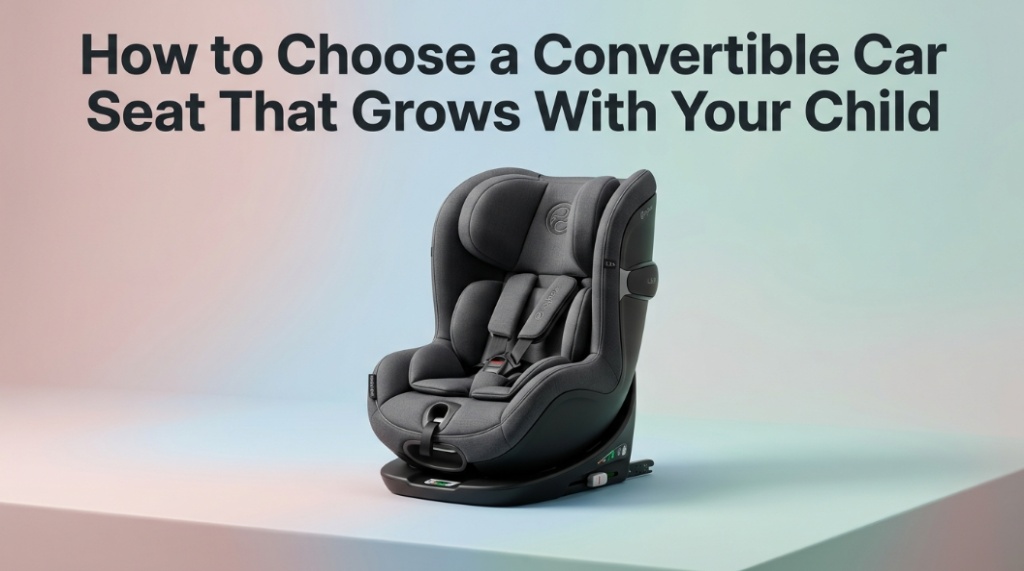
Most parents buy only three things, hoping they will still make sense four years later: a house plant, a winter coat one size too big, and a car seat. The difference is that a car seat directly affects your child’s safety every single trip. Choosing a convertible car seat that grows with your child means selecting a model that safely adapts from infancy through toddlerhood—and sometimes beyond—while meeting current safety standards, fitting your vehicle correctly, and supporting your child’s changing size and development.
What Is a Convertible Car Seat and Why Does It Grow With Your Child?
A convertible car seat is designed to transition from rear-facing to forward-facing use, allowing one seat to accommodate multiple growth stages instead of requiring frequent replacements.
Unlike infant-only seats that are outgrown relatively quickly, convertible models are engineered with adjustable harness systems, expandable headrests, multiple recline positions, and higher height and weight limits. Many modern options can accommodate children from as little as 5 pounds up to 65 pounds or more.
For parents researching child passenger safety requirements, reviewing state-specific guidance such as this detailed baby car seat safety guide for Texas families can help clarify age, height, and weight recommendations before making a purchase.
The biggest advantage is long-term value. Rather than purchasing separate infant and toddler seats, families can invest in one product designed to evolve alongside their child.
- Supports rear-facing travel for infants
- Transitions to forward-facing for older toddlers
- Provides adjustable safety features
- Reduces long-term equipment costs
- Maintains consistent installation familiarity
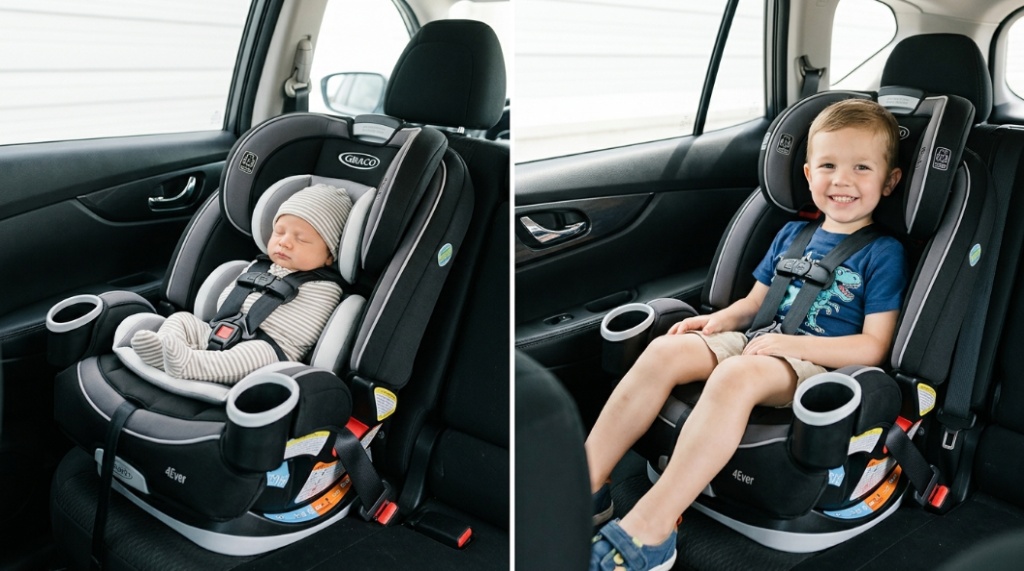
How Long Can a Child Use a Convertible Car Seat?
Most children can use a convertible car seat from infancy until approximately 5–7 years old, depending on the seat’s limits and the child’s growth pattern.
Safety experts consistently recommend keeping children rear-facing as long as possible because rear-facing seats better distribute crash forces across the head, neck, and spine. Many modern convertible models now offer rear-facing weight limits of 40–50 pounds.
Children grow differently, so parents should always follow manufacturer height and weight requirements rather than age alone. A seat with generous limits often provides several additional years of safe use.
Factors affecting seat longevity include:
- Maximum rear-facing weight capacity
- Maximum standing height allowance
- Harness height adjustment range
- Shell height and headrest extension
- Expiration date of the seat
What Features Should You Look for in a Growing Child Seat?
The best growing child seat includes high weight limits, easy adjustments, strong side-impact protection, and a secure installation system.
Parents often focus only on price, but usability matters just as much. A difficult-to-adjust harness can lead to improper use, reducing safety effectiveness.
High Rear-Facing Limits
Look for seats supporting at least 40 pounds rear-facing. Higher limits help children remain in the safest position longer.
No-Rethread Harness System
This feature allows harness height adjustments without removing and reinstalling straps. It saves time and ensures proper positioning as children grow.
Side-Impact Protection
Energy-absorbing foam, reinforced shells, and adjustable head protection help manage crash forces during side impacts.
Multiple Recline Positions
Proper recline angles improve comfort and help maintain safe positioning for younger children.
Machine-Washable Covers
Children spill snacks, drinks, and formula frequently. Removable covers simplify maintenance.
Should You Choose a Convertible Car Seat or an All-in-One Car Seat?
An all-in-one car seat offers the longest lifespan, while a convertible seat often provides a balance of simplicity, cost, and ease of use.
Families comparing long-term transportation expenses may also appreciate practical vehicle ownership advice, such as strategies for handling a vehicle sale when the loan balance exceeds the offer price, especially when upgrading to a larger family vehicle.
| Feature | Convertible Car Seat | All-in-One Car Seat |
|---|---|---|
| Rear-Facing Mode | Yes | Yes |
| Forward-Facing Mode | Yes | Yes |
| Booster Mode | No | Usually Yes |
| Average Lifespan | 5–7 Years | 8–10+ Years |
| Weight Capacity | Typically Up to 65 lbs | Often Up to 100+ lbs |
| Initial Cost | Lower | Higher |
An all-in-one car seat can function as a rear-facing seat, forward-facing seat, and booster. This versatility may reduce future purchases. However, some families find convertible seats easier to install and adjust.
How Do Weight and Height Limits Affect Safety?
Weight and height limits determine whether a child can safely use a specific seating configuration.
Many parents incorrectly transition children based solely on age. Manufacturers establish limits through testing and engineering standards, making those measurements the most reliable indicators.
Important guidelines include:
- Remain rear-facing until reaching the maximum rear-facing limit.
- Move forward-facing only after exceeding rear-facing requirements.
- Use booster mode only when appropriate size requirements are met.
- Monitor standing height and shoulder harness positioning regularly.
Exceeding limits can compromise crash protection and increase injury risk.
How Important Is Car Seat Installation?
Correct installation is just as important as choosing the right seat.
Research from child passenger safety organizations repeatedly shows that installation errors remain common. Loose installation, twisted harness straps, and incorrect recline angles can reduce protection during a collision.
Before purchasing, verify:
- Your vehicle accommodates the seat dimensions
- LATCH compatibility exists where desired
- The seat fits behind front passengers comfortably
- Installation instructions are easy to follow
- Manufacturer support resources are available
Many communities offer certified Child Passenger Safety Technician inspections that can verify proper installation.
What Safety Certifications Should Parents Check?
Every car seat sold in the United States must meet federal safety standards, but additional testing and safety features can provide extra confidence.
Look for compliance with:
- Federal Motor Vehicle Safety Standard (FMVSS) 213
- Side-impact testing programs
- Energy-absorbing foam systems
- Steel-reinforced frame construction
- Advanced crash management technologies
Independent crash-testing evaluations and consumer safety reviews can provide further insight into performance and usability.
What Makes a Convertible Car Seat Comfortable for Children?
Comfort encourages proper seating behavior and helps make longer trips easier for both children and parents.
Features contributing to comfort include:
- Adjustable headrests
- Breathable fabrics
- Extra infant inserts
- Deep side wings
- Multiple recline settings
- Legroom-friendly design
Comfort should never replace safety priorities, but a comfortable child is less likely to attempt unsafe movements during travel.

How Can Parents Tell When a Child Has Outgrown a Convertible Car Seat?
A child has outgrown the seat when height or weight limits are exceeded or when specific manufacturer fit requirements are no longer met.
Common signs include:
- Weight exceeds maximum approved limit
- Head extends beyond allowed shell height
- Harness positioning can no longer be adjusted correctly
- Shoulders exceed permitted harness slots
- Child exceeds stated standing height limits
Always consult the manufacturer’s manual because requirements vary by model.
Which Common Mistakes Should Parents Avoid?
The most common mistakes involve transitioning children too early and failing to adjust the seat as the child grows.
Avoid these errors:
- Turning a child forward-facing before reaching rear-facing limits
- Using bulky winter coats under harness straps
- Installing the seat loosely
- Ignoring expiration dates
- Buying used seats with unknown crash histories
- Failing to tighten harness straps correctly
- Skipping registration for recall notifications
Small installation or usage mistakes can significantly reduce protection during a crash.
How Do You Choose the Best Convertible Car Seat for Your Family?
The best choice combines safety, proper vehicle fit, long-term usability, and realistic daily convenience.
Consider these decision factors:
- Child’s current height and weight
- Expected growth rate
- Vehicle size and seating layout
- Budget and long-term value
- Ease of installation
- Cleaning requirements
- Travel frequency
- Safety ratings and certifications
Parents with multiple children may prioritize narrow designs. Frequent travelers may prefer lightweight models. Families seeking maximum longevity may lean toward an all-in-one car seat with booster functionality.
Conclusion: What Is the Smartest Way to Buy a Car Seat That Truly Grows With Your Child?
The smartest approach is choosing a convertible car seat with high rear-facing limits, adjustable safety systems, straightforward installation, and enough growth capacity to support several years of use. Prioritizing safety certifications, proper fit, and everyday usability will often deliver better long-term value than focusing solely on price.
As your child grows, your vehicle-related expenses may change as well. Exploring practical ways to reduce ongoing car insurance expenses can help families manage transportation costs while maintaining safety priorities.
A well-chosen growing child seat provides more than convenience. It offers consistent protection through critical developmental stages, helping parents travel confidently from the first ride home through the early school years. Compare specifications carefully, verify vehicle compatibility, and always follow manufacturer instructions for installation and usage. The right decision today can provide years of safety and peace of mind.
Frequently Asked Questions About Convertible Car Seats
Can a newborn use a convertible car seat?
Yes. Many convertible car seats are approved for newborns starting at 5 pounds and include infant inserts that help maintain proper positioning and support.
Is an all-in-one car seat better than a convertible car seat?
Not necessarily. An all-in-one car seat offers more stages of use, but a convertible model may be easier to install, less expensive initially, and sufficient for many families.
When should a child switch from rear-facing to forward-facing?
Children should remain rear-facing until they reach the maximum rear-facing height or weight limit specified by the manufacturer. This position provides superior protection during crashes.
How many years does a convertible car seat last?
Most convertible seats can be used for 5–7 years, depending on the child’s growth and the seat’s specifications. Always check expiration dates provided by the manufacturer.
Can I use a second-hand convertible car seat?
Only if its history is fully known, it has never been involved in a crash, all parts are present, and it has not expired. Otherwise, purchasing a new seat is generally safer.
What is the safest seat position in a vehicle for a child?
The rear seat is typically the safest location. The center rear position may offer additional protection when compatible with proper installation.
How tight should the harness straps be?
The harness should be snug enough that you cannot pinch excess webbing at the child’s shoulder. Proper tightness helps keep the child positioned correctly during a collision.