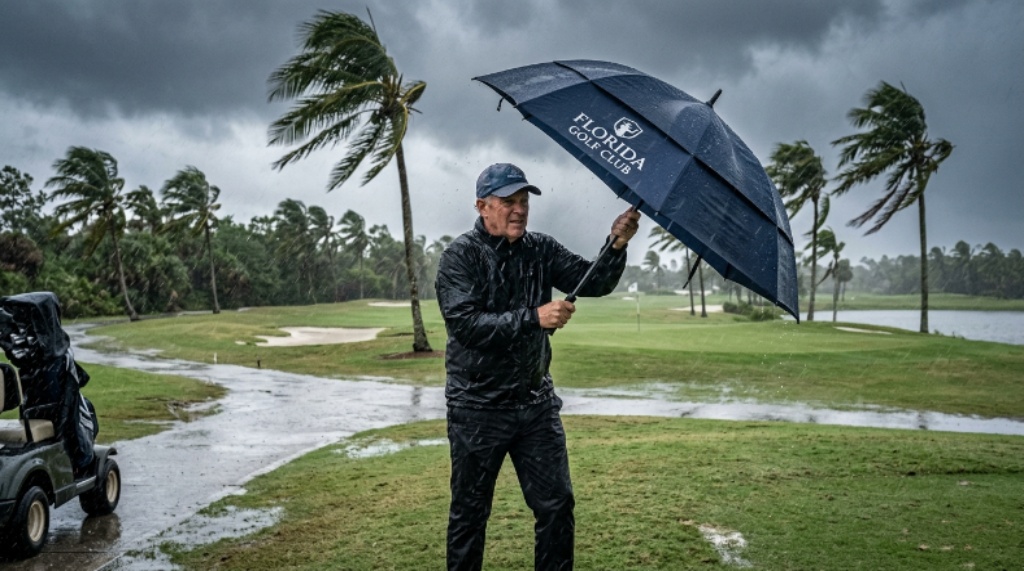
Florida is one of the most popular golfing destinations in the world. The sunshine, the lush courses, and the warm temperatures make it a golfer’s dream. However, Florida weather is famously unpredictable. One moment the sky is clear and blue. The next, dark clouds roll in and wind picks up without warning.
Playing golf in Florida means being prepared for sudden rain, strong gusts, and afternoon thunderstorms that arrive fast and hit hard. A standard umbrella will not cut it on a Florida golf course. You need something built specifically for these conditions.
This guide walks you through everything you need to know to choose the right umbrella for Florida’s unique weather. From frame construction to canopy size, every detail matters when the wind turns nasty mid-round.
Why Florida Golf Weather Demands a Specialized Umbrella
Florida sits in a subtropical climate zone. This means high humidity, intense afternoon heat, and a rainy season that runs from June through September. During this period, storms can develop quickly and bring heavy rain combined with strong, gusty winds.
Standard umbrellas are not designed for these conditions. Their frames bend or snap under pressure. Their canopies catch wind like a sail and invert within seconds of a strong gust. On a Florida course, that kind of failure leaves you completely exposed at the worst possible moment.
Therefore, investing in a proper windproof golf umbrella is not a luxury for Florida golfers. It is a necessity. The right umbrella keeps you dry, stays intact under pressure, and allows you to keep playing comfortably when conditions turn.
Understanding Windproof Frame Technology
The frame is the most critical part of any golf umbrella designed for windy conditions. A weak frame is the number one reason umbrellas fail in high winds. Understanding what makes a frame strong helps you make a smarter buying decision.
Fiberglass vs. Steel Frames
Steel frames are common in budget umbrellas. They are heavy and prone to bending under stress. Fiberglass frames are a far better choice for windy environments. Fiberglass flexes under pressure rather than snapping. It absorbs the force of a gust and springs back to its original shape once the wind eases.
Many high-quality golf umbrellas use a combination of materials. A fiberglass shaft paired with fiberglass ribs creates a frame that is both lightweight and highly resilient. Additionally, some premium models use carbon fiber ribs, which are even lighter and stronger than fiberglass.
Vented Double Canopy Design
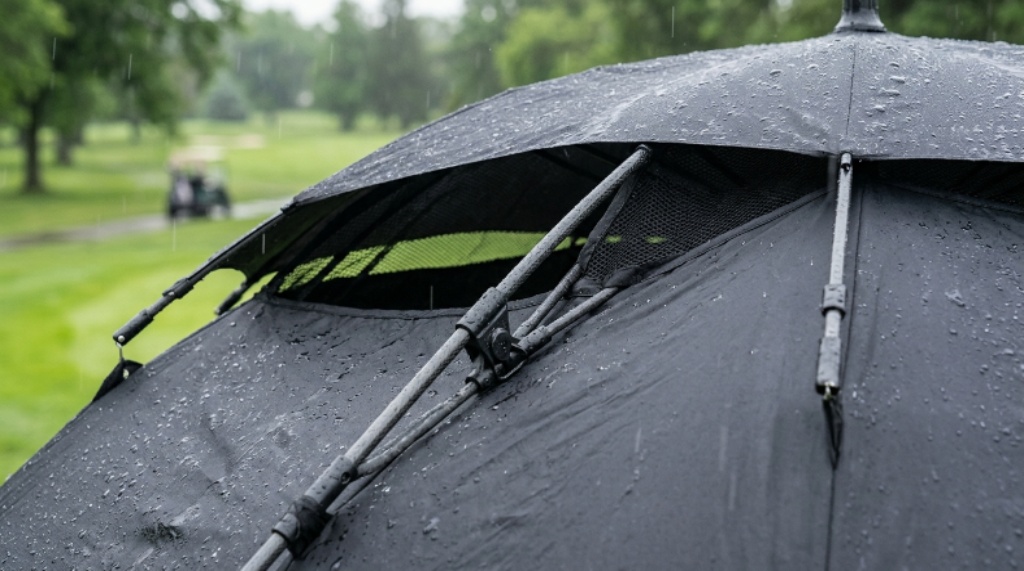
A vented canopy is one of the most effective wind-resistance features available. Single-canopy umbrellas trap air underneath the fabric, which creates upward pressure and causes the umbrella to invert or blow away.
A double canopy design solves this problem. It features two layers of fabric with a gap between them. Wind flows through this gap rather than pushing against the underside of the canopy. The result is a much more stable umbrella that stays open and controlled even in gusty conditions.
If you are shopping for a windproof golf umbrella and you see a double canopy design, that is a strong indicator of quality engineering. This single feature makes more difference than almost anything else in high-wind situations.
Number of Ribs and Spoke Count
More ribs mean more structural support. Budget umbrellas often have six ribs. Quality golf umbrellas typically have eight or more. A higher rib count distributes tension more evenly across the canopy, which reduces stress on any single point. Therefore, the frame is less likely to buckle when a sudden gust hits.
Canopy Size: Why Bigger Matters on the Course
Golf umbrellas are larger than everyday umbrellas for a reason. On a course, you often need to shelter more than just yourself. Your golf bag, your cart, and sometimes a playing partner all benefit from extra coverage.
The Ideal Size Range
Look for a canopy diameter between 60 and 68 inches. A 62-inch canopy is a common sweet spot. It provides generous coverage without being so large that it becomes unwieldy in the wind.
Canopies larger than 68 inches offer excellent coverage but can be difficult to handle in strong gusts. They also add significant weight, which becomes tiring during a long round. However, for golfers who primarily use a cart and rarely walk, a larger canopy may be worth the tradeoff.
Arc vs. Diameter Measurements
Pay attention to how manufacturers measure their umbrellas. Some list the arc measurement, which is the length from one tip to another when open. Others list the diameter across the top. These measurements are not the same. Arc measurements are typically larger than canopy diameter. Always clarify which measurement is being used to avoid buying something smaller than expected.
Choosing the Right Canopy Fabric for Florida Rain
A rain golf umbrella needs a canopy fabric that repels water effectively and dries quickly. Florida rain comes in heavy bursts, so the fabric needs to handle serious downpours without soaking through.
Polyester and Pongee Fabrics
Most quality golf umbrellas use either polyester or pongee fabric. Polyester is durable and water-resistant. It holds up well over time and resists fading in the intense Florida sun. Pongee is a lighter, finer weave that feels softer and often has a slightly better drape.
Both materials work well when treated with a water-repellent coating. Look for umbrellas that specifically mention a DWR (durable water repellent) finish. This coating causes rain to bead up and roll off the canopy rather than soaking through.
UV Protection
Florida sun is intense, and an umbrella that only blocks rain but lets through UV radiation misses an important function. Many golf umbrella canopies now include UPF (ultraviolet protection factor) ratings. A UPF 50+ rating blocks more than 98 percent of UV rays, providing meaningful sun protection during those rounds between storms when the sun blazes down hard.
Handle and Grip: Comfort Over a Long Round
The handle affects how comfortable the umbrella is to carry and hold during a full round. A poor handle causes hand fatigue and makes it harder to control the umbrella in wind.
Rubber and Soft-Touch Grips
Look for handles with a rubber or soft-touch coating. These materials provide grip even when your hands are wet. Smooth plastic handles become slippery in the rain and are difficult to hold securely in gusting wind.
Additionally, a handle with a slight curve or ergonomic shaping reduces wrist strain during extended use. Some golf umbrellas include a wrist strap, which adds security and prevents you from losing the umbrella in a strong gust.
Crook vs. Straight Handles
Traditional umbrellas have a hooked crook handle. Golf umbrellas more commonly feature a straight handle, which makes them easier to hook onto a golf bag or cart when not in use. A straight handle also tends to be more comfortable during extended carrying.
Practical Features Worth Looking For
Beyond the core construction, a few extra features can make a real difference on the course.
- An automatic open button allows you to deploy the umbrella quickly with one hand, which is useful when a storm rolls in suddenly.
- A carry sleeve or bag protects the umbrella during transport and keeps it compact in your golf bag.
- Bright or high-visibility color panels improve your visibility on the course, which is a useful safety feature when lightning alerts others to stay clear.
- A non-conductive fiberglass shaft is an important safety consideration. Metal umbrellas conduct electricity, which is a genuine risk during Florida’s frequent lightning storms.
What to Avoid When Shopping for a Golf Umbrella in Florida
Not every umbrella marketed as a golf umbrella is suitable for Florida conditions. Knowing what to avoid saves you money and frustration.
Avoid umbrellas with steel shafts and ribs. They are heavier, less flexible, and more likely to conduct electricity. Avoid single-canopy designs without any venting, as these will invert in strong gusts. Steer clear of anything with fewer than eight ribs if wind resistance is a priority.
Additionally, be cautious of umbrellas with very cheap plastic mechanisms. The opening and closing mechanism takes the most stress during repeated use. Plastic components wear out quickly, especially in the wet conditions common to Florida courses.
Conclusion
Choosing the best golf umbrella for Florida’s windy weather comes down to a handful of key decisions. Start with a fiberglass frame and a vented double canopy design for maximum wind resistance. Choose a canopy between 62 and 68 inches for practical coverage without becoming unmanageable. Look for polyester or pongee fabric with a DWR coating and a UPF rating to handle both rain and sun. Prioritize a rubber grip handle with a straight shaft for comfort and safety.
A well-chosen windproof golf umbrella transforms a miserable weather situation into a manageable one. And in Florida, where afternoon storms are simply part of the golfing experience, that preparation makes every round more enjoyable. Do not wait until you are caught in a downpour with a failing umbrella to take this decision seriously. The right rain golf umbrella is one of the best investments you can make for your time on the course.
Frequently Asked Questions
What size golf umbrella is best for Florida weather?
A canopy diameter between 62 and 66 inches is ideal for most Florida golfers. This size provides generous coverage for you and your bag without becoming too difficult to manage in strong winds. Larger canopies offer more shelter but require more effort to control in gusty conditions.
Are double canopy umbrellas really better in the wind?
Yes, significantly so. The vented gap between the two canopy layers allows air to pass through rather than building up underneath. This dramatically reduces the chance of the umbrella inverting or being pulled from your grip during a strong gust.
Is a fiberglass shaft really important for lightning safety on a golf course?
Yes. Metal shafts conduct electricity, which poses a real risk during lightning storms. Fiberglass is a non-conductive material, making it a much safer option on a golf course where you are often the tallest point in an open space.
How do I care for my golf umbrella to make it last longer?
Always allow your umbrella to dry fully before storing it closed. Storing it wet encourages mold and weakens the fabric coating over time. Periodically reapply a DWR spray to maintain water repellency. Avoid forcing the mechanism open or closed, as this puts stress on the ribs and joints.
Can I use a golf umbrella as a regular everyday umbrella?
You can, but their larger size makes them less practical for everyday use in crowds or public transport. They are best suited to open spaces like golf courses, sports events, or large outdoor areas where the extra coverage and wind resistance are genuine benefits.